In a busy shop you quickly learn which tools save time and which tools just take up drawer space. For diesel mechanics the right diagnostic tools turn ambiguous symptoms into clear, actionable tests—so you can fix faults rather than chase them. Below is a practical list of the diagnostic tools worth owning, why each one matters, common trade-offs, and a single product recommendation that fits most heavy‑duty needs.
Answer: Core tools every diesel mechanic should own
At minimum, a competent diesel technician needs: a heavy‑duty scan tool (J1939/J1708 capable), a quality multimeter, fuel pressure gauge, compression tester, injector/flow/return tester or suitable adapter, a smoke/leak detector, and a borescope. Those six cover most electrical, fuel, air, and mechanical diagnostics you’ll encounter.
Heavy‑duty scan tool: the diagnostic hub
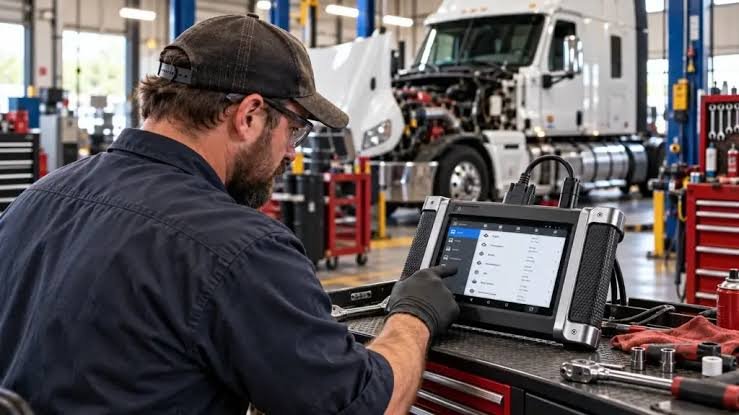
The scan tool is the cornerstone. It reads fault codes, displays live parameters (fuel rail pressure, EGR position, turbo boost, DEF/DPF status), and—if bi‑directional—commands actuators for functional tests. For light commercial to heavy trucks you need a unit that supports 12V and 24V systems and the heavy protocols (J1939 and J1708).
Why buy a capable model: faster fault isolation, fewer unnecessary parts replaced, and access to OE‑level tests like injector cutouts, DPF regen control, and ABS/TC module checks. Trade‑offs are cost and software update subscriptions; pick a tool with regularly updated vehicle coverage.
This ANCEL X7HD PRO recommendation suits most shops: full‑system diagnostics, heavy‑duty protocols and bi‑directional capability in one handheld unit. Use it first in diagnostics—if the scanner shows rail pressure irregularities, move to fuel tests; if codes point to crank/cam correlation problems, add compression testing.
Multimeter: basic electrical troubleshooting you’ll use daily
A rugged digital multimeter is indispensable. Use it for continuity, voltage drop checks on starting circuits, sensor supply voltages, and verifying grounds. Buy a meter that can reliably measure millivolts and frequency (for certain injector or sensor tests) and has a fused input for safety.
Small detail: avoid ultra‑cheap meters lacking true RMS or stable low‑voltage reading—those create confusion on modern diesel sensors.
Fuel rail pressure gauge and injector flow/return tools
Fuel pressure is a common failure point. A mechanical or digital fuel pressure gauge that adapts to the vehicle’s fuel rail lets you confirm pressure under idle, load, and cranking. Combine that with a return‑flow tester or injector cup to compare injector return rates and spot leaking or low‑delivery injectors.
Note the difference: rail pressure failures implicate pump/regulator or lines; uneven injector returns implicate injector health or timing. Both tests are quick and reduce guesswork.
Compression tester and leak‑down tester for mechanical issues
Compression checks are the fastest way to rule in or out valve, ring, or head problems. Use a compression gauge on each cylinder and repeat with a wet test (add a small amount of oil) to distinguish worn rings from valves. A leak‑down tester is the next step when you need to identify whether leakage is through valves, rings, or head gasket.
Smoke machine and vacuum/pressure tester for intake and exhaust leaks
Air leaks and EGR/exhaust leaks are stealthy sources of poor performance and DPF problems. A smoke machine introduces visible smoke into the intake or crankcase to reveal leaks at hoses, intercooler cores, intake manifold gaskets, or PCV systems. Complement with a hand‑held vacuum pump for actuator and sensor testing (EGR valve, vacuum lines).
Borescope/inspection camera and basic shop diagnostic accessories
A flexible borescope lets you inspect cylinder walls, piston crowns, turbo internals, and injector ports without disassembly. Combine this with good LED work lighting, fused test leads, hook probes, and adapter cables for OEM connectors to save time when probing sensors and connectors.
When to upgrade or specialize
- If you service heavy‑duty fleets regularly, prioritize a top‑tier HD scanner with frequent updates and manufacturer coverage; software subscription costs are often justified by saved diagnostic hours.
- If you work mostly on injectors or common‑rail components, add a dedicated injector diagnostic kit or partner with a local flow bench—field injector testing is limited and often misleading without proper equipment.
- For off‑road equipment (excavators, agricultural machines) confirm your scanner supports non‑road protocols and OEM adapters—some tools are truck‑focused and miss construction equipment specifics.
Practical workflow: using these tools together
Start with the scan tool to read codes and live data. Use the multimeter to check sensor circuits and power/ground. If codes or live data suggest fuel issues, move to the fuel pressure gauge and injector return tests. If you hear/presume leaks, use the smoke machine and borescope. Reserve compression and leak‑down tests for persistent misfire, low power, or suspected mechanical damage.
- Confirm scanner supports 12V/24V and J1939/J1708 protocols.
- Choose a multimeter with millivolt resolution and fused inputs.
- Have one fuel pressure gauge plus an injector return/flow adapter kit.
- Keep a smoke machine or access to one for intake/exhaust leak checks.
- Stock a borescope and a vacuum hand pump for actuator tests.
- Track software update costs before buying a high‑end scanner.
A compact toolkit—HD scan tool, multimeter, fuel and compression testers, smoke machine, and borescope—covers the bulk of diesel diagnostics. Invest first in a scanner with proper protocols; add specialised tools as your shop’s workload and vehicle mix demand.
Do I need a bi‑directional scan tool?
Yes, if you want to command actuators for functional tests (injector cutout, regen control, valve actuation); it speeds up diagnostics significantly for heavy‑duty vehicles.
Can a generic OBD2 scanner work on diesel trucks?
Generic OBD2 scanners often lack heavy protocols (J1939/J1708) and bi‑directional functions; they’re limited for medium/heavy trucks. Use them only for simple code reading on light diesels.
How often should I calibrate or check my diagnostic tools?
Multimeters and pressure gauges should be checked annually; scanner software should be updated per manufacturer recommendations—often monthly or quarterly for best coverage.
Is injector testing in‑car reliable?
In‑car injector return testing and rail pressure checks are useful screening tools, but precise flow measurements usually require bench testing for definitive results.
Which tool delivers the best ROI for a small shop?
A heavy‑duty scanner that covers your vehicle mix delivers the fastest ROI by reducing unnecessary part replacements and diagnostic hours.